
New Orleans Obituary Records
New Orleans obituary records span more than two centuries of documented history, giving researchers access to one of the most extensive local death record collections in the country. Whether you need a recent death certificate from the Louisiana Vital Records Registry, a genealogy search through the New Orleans Public Library City Archives, or historical records held by the Orleans Parish Civil Clerk, this guide covers the offices, procedures, and online tools you can use right now to find New Orleans obituary records.
New Orleans Quick Facts
New Orleans Death Records at the State Level
Louisiana is a closed-record state. Under RS 40:41, death records remain confidential for 50 years after the year of death. That means recent certificates are restricted to immediate family members, legal representatives, and others with a direct tangible interest. The state defines eligible requesters clearly: surviving spouse, parents, adult children, siblings, grandparents, grandchildren, and certain legal agents.
The Louisiana Vital Records Central Office sits right in New Orleans. You can walk in at 1450 Poydras Street, Suite 400, Monday through Friday from 8:00 AM to 3:30 PM. The fee is $7.00 plus a $0.50 state charge per death certificate. Mail requests go to Vital Records Registry, PO Box 60630, New Orleans, LA 70160 and take 8 to 10 weeks. You can also order through VitalChek at 1-877-605-8562 for faster processing, though extra fees apply.
Death records older than 50 years become public. The Louisiana Secretary of State Death Records Index lets you search online and order photocopies by mail for $5 each or certified copies for $10 each. This database covers deaths more than 50 years before the current calendar year. For Orleans Parish specifically, some death records dating back to 1804 are available through the Louisiana State Archives at 3851 Essen Lane, Baton Rouge, at (225) 922-1206.
Note: Parish Clerks of Court can issue certified copies of death certificates for deaths on or after July 7, 2012, at a cost of approximately $26 per copy.
Orleans Parish Civil and Criminal Clerks
New Orleans is unique in Louisiana because it maintains two separate clerk offices: the Civil District Court Clerk and the Criminal District Court Clerk. Most records relevant to obituary and death research fall under the Civil Clerk's jurisdiction, though criminal court records can be relevant for cause-of-death documentation or estate matters.
The Orleans Civil District Court Clerk at 421 Loyola Avenue handles civil proceedings, successions, and the Notarial Archives Research Center. That Notarial Archives holds documents going back to the 1700s, making it one of the most historically significant legal record repositories in the United States. Notarial records can name deceased individuals in succession documents, property transfers, and estate settlements long before formal death certificates were required. If you are tracing a family line that ran through New Orleans in the 18th or 19th century, this is a key stop.
| Office | Orleans Civil District Court Clerk |
|---|---|
| Address | 421 Loyola Avenue, New Orleans, LA 70112 |
| Phone | (504) 592-9100 |
| Website | orleanscivilclerk.com |
The screenshot below shows the Orleans Civil District Court Clerk website, which provides access to case search tools and information on requesting records related to successions and estate filings in New Orleans.
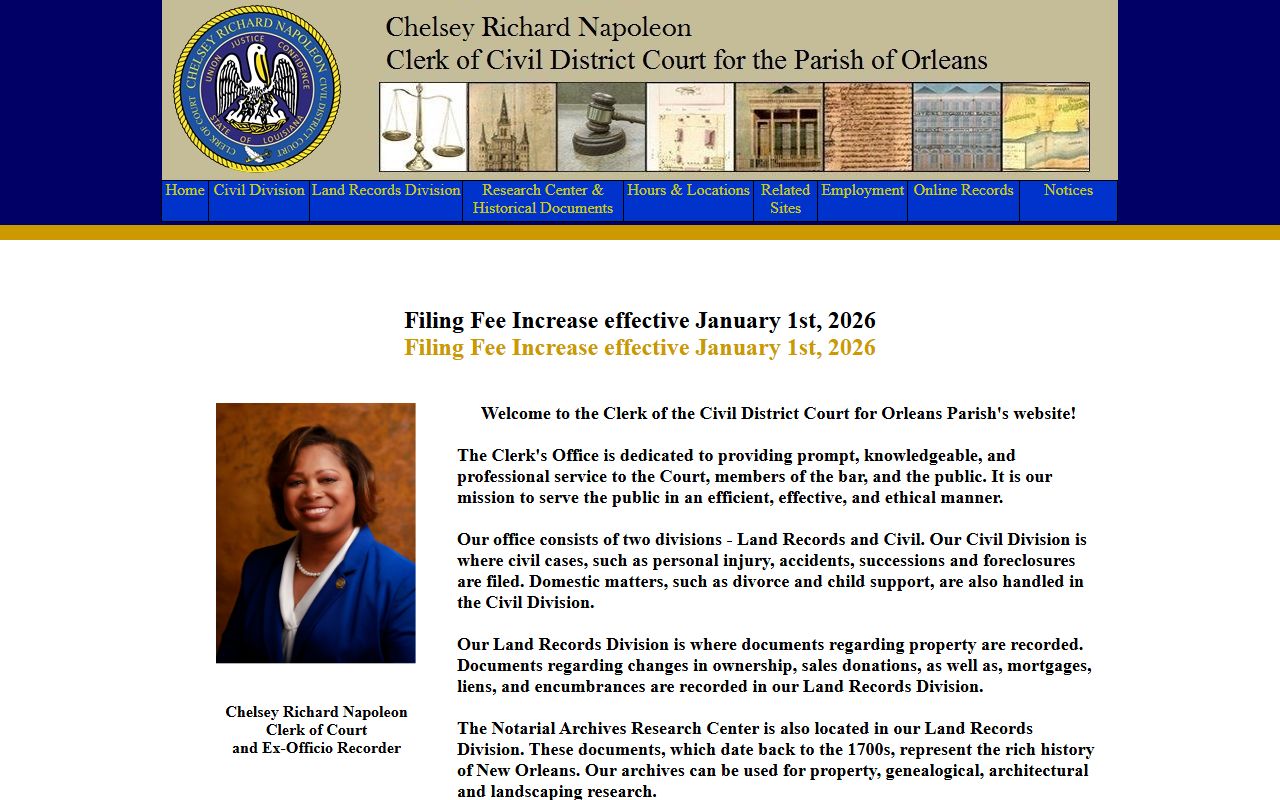
The civil clerk's online portal allows searches of civil case filings, which can help when tracing estate and succession records tied to a death in New Orleans.
| Office | Orleans Criminal District Court Clerk |
|---|---|
| Address | 2700 Tulane Avenue, Room 114, New Orleans, LA 70119 |
| Phone | (504) 658-9000 |
| Website | criminalcourt.org |
The screenshot below shows the Orleans Criminal District Court Clerk's website, which holds records from criminal proceedings sometimes tied to death investigations or coroner matters in Orleans Parish.
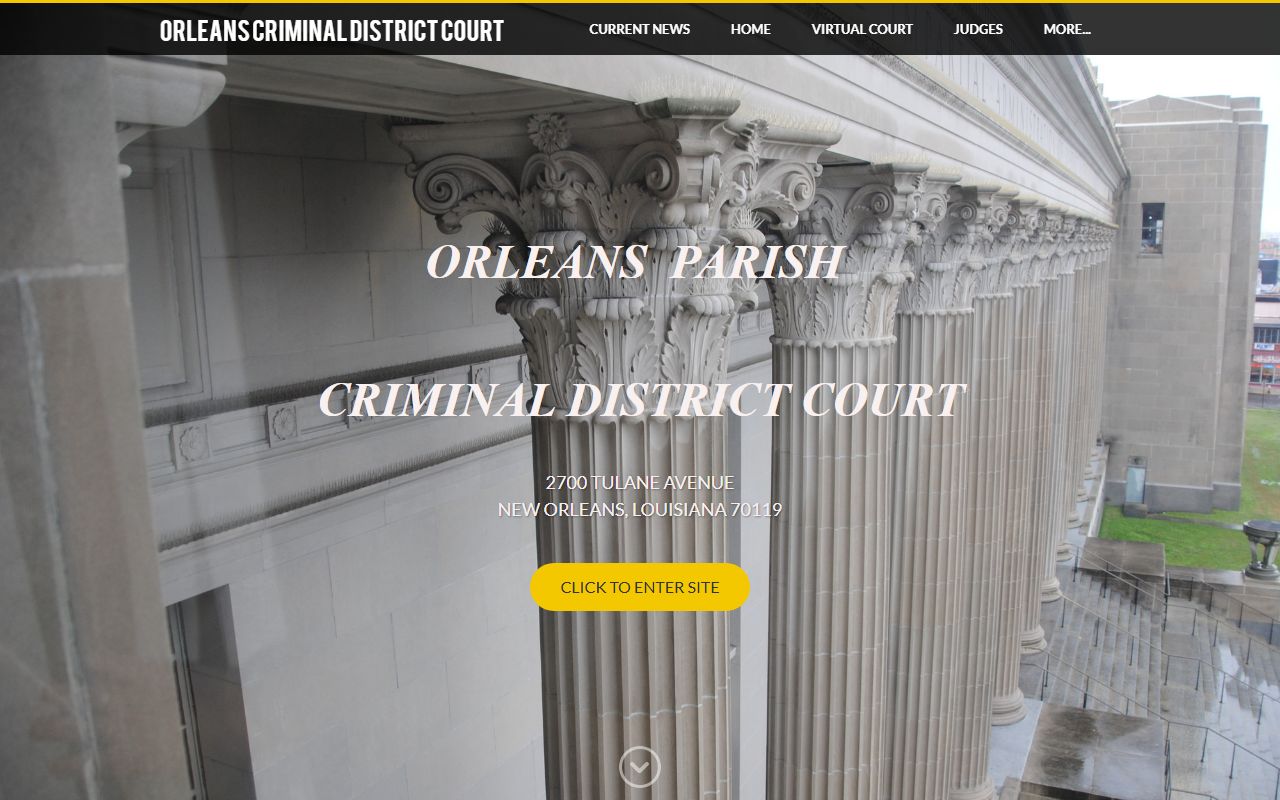
Criminal court records in New Orleans can document coroner referrals and cases where cause of death became part of a proceeding, giving researchers another path for death-related documentation.
New Orleans Public Library City Archives
For genealogical research and historical obituary records, the New Orleans Public Library City Archives is one of the most valuable resources in Louisiana. Located at 219 Loyola Avenue, (504) 596-2610, the archives holds more than 650,000 names drawn from local newspapers and city records spanning 1804 to 1972. This represents nearly 170 years of documented New Orleans deaths, births, marriages, and biographical data compiled in a single index.
The NOPL City Archives also holds the Orleans Parish death certificate index covering 1804 through 1915, and the New Orleans birth certificate index from 1790 to 1904. For anyone researching family history before formal state vital records registration was required, these archives fill a major gap. The Times-Picayune obituary index covers 1972 to the present, so researchers can trace deaths across two very different time periods using a combination of NOPL holdings and the newspaper's own online archive.
Many public libraries in Louisiana provide free access to newspaper databases with a valid library card. The NOPL system gives cardholders digital access to historical newspaper archives, making it possible to find published obituaries from home without visiting in person. This is a practical starting point before requesting a formal death certificate from the state.
Historical Archives for New Orleans Obituary Research
New Orleans has more specialized archives than almost any other city in Louisiana. Each institution below holds different types of death-related and biographical records that supplement official vital records sources.
- Historic New Orleans Collection, Williams Research Center: 410 Chartres St, (504) 598-7171
- Genealogical Research Society of New Orleans (est. 1960): local genealogical support and research services
- Archdiocese of New Orleans Archives: sacramental records from 1718 through 1900
- Amistad Research Center at Tulane University: ethnic history and biographical records
- Louisiana Historical Society (founded 1835): historical documents and biographical collections
- Notarial Archives Research Center (Civil Clerk): estate and succession documents from the 1700s
The Archdiocese of New Orleans Archives is especially important for pre-Civil War death research. Catholic baptismal, marriage, and burial records go back to 1718, predating formal state record-keeping by more than a century. These sacramental records often serve as the only documented evidence of death for individuals who lived in New Orleans during the colonial and antebellum periods. If you cannot find a death record in government files, church records may be the next best source.
The Amistad Research Center focuses on African American history and holds materials related to individuals rarely represented in official government records. For descendants of enslaved people or free people of color in New Orleans, Amistad can provide genealogical documentation that government records cannot supply. This makes it a necessary resource for many family history searches in the region.
Note: The Louisiana Biography and Obituary Index at NOPL covers 650,000+ names from New Orleans-area newspapers, making it the largest local obituary index in the state.
Louisiana Public Records Law and New Orleans Death Records
Louisiana's public records law, La. Admin. Code tit. 48, §V-11707, outlines procedures for requesting certified copies of vital records. Under RS 44:31, most government records in Louisiana are accessible without needing to state your reason. However, death certificates remain restricted under RS 40:41 until the 50-year window opens. Once open, the Louisiana SOS online vital records portal makes searching straightforward and affordable.
Fact-of-death letters are a separate category. Under RS 44:19, fact-of-death letters are public records available to spouse, parent, sibling, or child of the deceased. This document confirms the fact of death without the confidential details restricted under RS 40:41. It may be enough for some purposes, such as closing an account or notifying an institution, without triggering the full access restrictions on a death certificate.
For records processed through the state system, payment must be made by check or money order. The state registry cannot accept responsibility for cash sent through the mail. In-person requests at the Vital Records Central Office at 1450 Poydras Street allow for same-day service during walk-in hours.
Nearby Louisiana Cities
Other cities in the greater New Orleans area also maintain obituary and death record resources worth exploring if your research extends beyond the city limits.
Orleans Parish Obituary Records
New Orleans sits entirely within Orleans Parish. All vital record filings, court successions, and official death documentation for city residents fall under Orleans Parish jurisdiction. The parish clerk manages court filings while the state handles vital records issuance. For a full overview of Orleans Parish obituary and death record resources, visit the parish page.